
Temperature Mapping of GDP Equipment
Ensuring Compliance in Trailers, Warehouses, and Packaging
Temperature mapping is a critical requirement in Good Distribution Practice (GDP) logistics, ensuring that the environments used to store and transport pharmaceutical products consistently maintain the required temperature ranges. For any equipment used in the cold chain—trailers, storage areas, and packaging systems—mapping provides documented evidence that conditions remain within validated limits, safeguarding product quality and regulatory compliance.
Pharmaceutical products are often sensitive to even minor temperature fluctuations. Without validated environments, companies risk product degradation, loss of efficacy, and potential regulatory penalties. Temperature mapping identifies temperature variations over time and space, helping companies mitigate risks, optimize storage and transit conditions, and demonstrate full compliance with GDP and other applicable regulations such as EU GDP Guidelines, WHO standards, and national health authority expectations.
Temperature Mapping in Trailers
Refrigerated trailers are widely used for transporting medicines across road networks. These units must undergo seasonal temperature mapping to prove they can maintain target temperature ranges (e.g., 2–8°C, 15–25°C) under real-world conditions. Mapping includes:
-
Placing calibrated temperature sensors in multiple positions (floor, ceiling, front, rear, sides)
-
Running full test cycles under empty and loaded conditions
-
Verifying air distribution, uniformity, and the performance of the cooling system
-
Documenting results to support qualification and future audits
Mapping also helps identify hot/cold zones and supports decisions on where to place temperature-sensitive goods inside the trailer.
Temperature Mapping in Warehouses
GDP-compliant warehouses, whether ambient or temperature-controlled, must also undergo initial and periodic temperature mapping. This ensures the integrity of pharmaceutical products during storage and identifies any temperature excursions caused by environmental factors, equipment failure, or poor air circulation. Key steps include:
-
Conducting mapping over 24–72 hours during worst-case seasonal conditions
-
Mapping multiple zones, including corners, loading docks, racking levels, and door areas
-
Evaluating HVAC performance and thermal uniformity
-
Supporting the validation of monitoring systems and alarm setpoints
Proper mapping allows companies to set accurate monitoring strategies and ensure that all storage locations consistently meet regulatory standards.
Temperature Mapping for Packaging Systems
For passive and active packaging used in cold chain shipments, performance qualification (PQ) includes thermal mapping under various external temperature profiles (e.g., summer/winter profiles based on ISTA or WHO standards). This ensures that packaging systems can protect products for the full shipping duration.
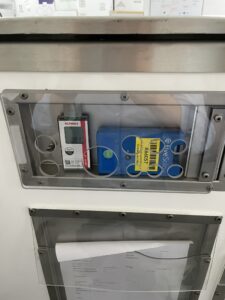
Mapping supports:
Selection and qualification of lane-appropriate packaging solutions
Proof of duration and stability of temperature control
Design of SOPs for packaging, loading, and conditioning
Compliance with customer and regulatory expectations
How Work On BV Supports Temperature Mapping Activities
Work On BV offers comprehensive support in the planning, execution, and documentation of temperature mapping studies across all critical GDP equipment. Services include:
-
Drafting and executing mapping protocols (IQ, OQ, PQ)
-
Coordination with calibration labs and validation engineers
-
Analysis and interpretation of mapping data
-
Creating audit-ready reports and risk assessments
-
Supporting seasonal requalification and change control procedures
-
Designing placement guides and monitoring strategies for daily operations
By combining technical expertise with regulatory insight, Work On BV ensures your trailers, warehouses, and packaging systems are qualified, compliant, and optimized for consistent performance.
In summary, temperature mapping is not just a regulatory requirement—it’s a cornerstone of pharmaceutical quality assurance. With the right strategy and execution, supported by experienced partners like Work On BV, companies can protect product integrity, maintain GDP compliance, and ensure full supply chain visibility from origin to destination.